Thursday, April 5, 2012

Enjoy Every Sandwich

These guys are soft packin'

IE Weekly

By Arrissia Owen

The Soft Pack lives by the words of the late Warren Zevon

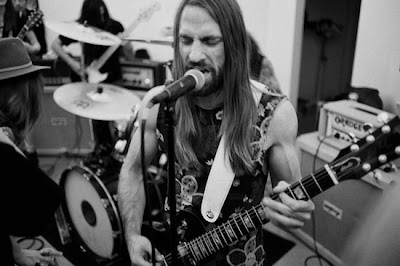
“This one’s for Warren Zevon,” singer Matt Lamkin shouted to millions of TV viewers just before his band The Soft Pack launched into a rousing rendition of its single “Answer to Yourself.” That was February 2010, and Lamkin and company were in New York promoting the self-titled LP on Late Show with David Letterman.
The LA-based band has been on tour ever since, promoting the tracks while writing and recording songs for its upcoming fall release. The unexpected shout out sent a jolt through Letterman’s staff, guitarist Matty McLoughlin fondly recalls.
Zevon was a frequent guest and friend of Letterman who choked up the host on air in 2003 during his last Late Show appearance months before he succumbed to lung cancer. The Matts, who are huge Zevon fans along with drummer Brian Hill and bassist David Lantzman, spent time chatting with staff afterward, getting earfuls of anecdotes about the sardonic songwriter.
That performance was one of many highlights for the band during the last two years. Letterman is up there with 2010 slots at Coachella and South by Southwest, “Answer to Yourself” fueling beer commercial bravado and opening for bands like the Breeders and Franz Ferdinand.
These days The Soft Pack heads through the IE on Wednesday, April 11, opening for Arctic Monkeys at The Glass House in Pomona, followed by the Moon Block Party Thursday, April 12, with Dengue Fever at Dillion’s Roadhouse in Palm Springs.
While the band shared stages with heavy hitters, The Soft Pack boasts its own dedicated followers. Its fans freak for the deadpan deliverance of jangly pop reminiscent of post-punk forefathers the Modern Lovers and Manchester band The Fall.
The Soft Pack formed in San Diego in 2007 after McLoughlin returned from Virginia after college. McLoughlin and Lamkin, who was still in high school, hung out and wrote songs while geeking out over their shared love for the aforementioned bands, as well as Hot Snakes, The Velvet Underground, Iggy Pop, The Kinks, R.E.M. and, for variety, Steely Dan.
“We wanted to do repetition and simplicity,” McLoughlin says, with a nod to Mark E. Smith’s musical philosophy, The Fall’s cultish frontman. “Everything else was just up in the air.” The result is Lamkin’s lyrics that dryly dismiss any sort of hype, adoration or ambition over grinding guitars, a stomping backbeat and funky bass lines that maintain that sought-after straightforwardness.
By 2008, The Soft Pack, then known by its much-maligned name The Muslims, relocated to Los Angeles. The moniker attracted negative press, even some racist rants. The music itself was getting rave reviews though, so the group ditched the diversion.
To give fans and the press something else to talk about, the band members set aside their apathy for ambition and tore through 10 shows in 13 hours throughout the Los Angeles area.
“It was cool, but really exhausting,” McLoughlin says about the marathon musical tour that the L.A. Times hopped on the bus for. “I think we will be doing something less exhausting this time.” The band has spring and summer to figure out its next move.
The upcoming release is more diverse, McLoughlin says, with more instrumentation added. Fans can also anticipate some robust beats thanks to Lamkin’s affinity for Funkadelic, Sun Ra and Sly and the Family Stone. “Sonically, there is more soul. It’s bare bones, but it’s still rock music, pop songs. It sounds bigger.”
The recordings are under wraps, but fans can catch sneak peeks as the band continues to tour, something they’ve taken little time off from. But don’t expect any road warrior ramblings to creep into their repertoire.
“When people start writing about the road, that starts sounding very Bon Jovi, and that’s boring,” McLoughlin says with a laugh, preferring Zevon’s take on the whole Wanted-Dead-or-Alive thing. “That’s dumb. Who wants to write about sitting in a van?” The boys are more excitable than that.
The Soft Pack w/Arctic Monkeys at The Glass House, 200 W. 2nd St., Pomona, (909) 865-3802; www.glasshouse.us. Wed, April 11. 7pm. $35.

For the original post, visit here:  http://ieweekly.com/2012/04/music-2/music/enjoy-every-sandwich/

Beauty is in the Eye of the Skateboarder

Decks in Effect


IE Weekly

By Arrissia Owen

A San Bernardino museum delves into the realm of skate art

“Full Deck: A Short History of Skate Art” brings new meaning to canvassing the neighborhood. The celebration of the subculture that emerged from a once-maligned pastime is at Cal State San Bernardino’s Robert and Frances Fullerton Museum of Art’s through April 21.
Skateboarding, with deep roots in 1960s surf culture, emerged into a full-blown billion dollar industry toting superstars like Tony Hawk and Rob Dyrdek who surpass skate fame. With the intense growth spurt pushing the sport into the mainstream an industry continues to emerge that holds steadfast to its values, touting creativity and freedom of expression as its call to arms.
The wooden skate decks they rolled through town became the army of athletes’ calling cards, a way for skaters to express their individuality. “Full Deck” is an anthology of skate art, with artifacts and photography thrown in for cool context. Close to 300 decks exhibited are borrowed from artists, skaters, collectors and companies from across the U.S.

Performers vs. Athletes

“Skateboarding and art are for the most part individual pursuits without really any rules or confines,” says skateboard company Enjoi’s graphic designer Winston Tseng, whose board designs are featured prominently in “Full Deck.” “They foster creativity, and are both ultimately forms of self-expression. When you look at it that way, skateboarding at its core is a lot closer to performance art than it is to any traditional competitive sports. So it makes sense that a person who’s drawn to or excels in one would gravitate towards the other as well.”
Exhibit curator Carrie Lederer calls the skate deck images one of the purest forms of self-expression, highly personal and mostly created without artistic boundaries, just like skateboarding. Lederer is the curator of exhibitions and programs at the Bedford Gallery, Lesher Center for the Arts in Walnut Creek.
“Art and Skateboarding are both acts of creation that involve an ethic of freedom of movement and personal exploration,” says artist and skateboarder Mike Kershnar, known for his neo-folk art influenced by 1980s skate deck designs and low brow artists like Robert Williams. His work has been featured in art and urban lifestyle magazines Juxtapoz and Mass Appeal, as well as skate mag Thrasher.
“Style is the essence of both pursuits, and there is a passionate subculture around the two and the interconnection of the two,” Kershnar says. “It was also skateboard graphics and the art direction of early skate mags that really pronounced to the world what skateboarding was about and where our artistic, aesthetic, spiritual heritage was from.”
A Coat of Arms
The exhibit features historic decks from private collections, unique hand-painted decks, commercial boards, photography, painting, prints, sculpture and videos. Professional skater Corey Duffel, who hails from Walnut Creek, loaned decks from his private collection, which travels from the Bedford to museums, galleries and universities throughout the U.S.
The exhibit includes one-of-a-kind hand-stained decks by Zepher Skate Shop’s Skip Englbom, who was profiled in the movie Lords of Dogtown. There is also a collection of 1960s boards on loan from pro skater Sam Cunningham, a broad range of now rare commercial decks from Element, Enjoi, Krooked, plus more from the collection of Mark Whiteley, editor of skateboarding magazine SLAP.
Other collections featured are from Jason Strubing, owner of Skateworks in Santa Cruz, Metro Skate of Pleasant Hill, StreetCorner Skate of San Francisco and Thrasher magazine. Photography by Bryce Kanights, Tobin Yelland and more are on view.
“When we skate down the street, we are often met with dirty looks, barking dogs, honking cars, etcetera,” Kershnar says. “I look at the graphics on my skateboard as a coat of arms, or a medicine shield against negativity, and a self affirming statement of who I am, and even why I skate. I love to add stickers to my board that show a variety of personal influences, friendships and inspiration.”

A Bit Offensive and Borderline Inappropriate

The show’s skate decks run the gamut, from vintage Santa Cruz and Powell Peralta to artists like Todd Francis, Mofo, Pushead and Kershnar to Tseng’s The Lebowski Five, a five-part series with each character of the beloved movie featured. Tseng’s whimsical style has made for some memorable decks over the years.
“I like my work to always have an idea or some meaning behind it, and I suppose humor is my preferred way of getting that message across,” Tseng says. “I think humor in general appeals to all of society no matter what the context, but my personal sense of humor probably resonates with skaters because it’s admittedly a bit offensive and borderline inappropriate, just like a lot of skaters.”
Tseng’s work is decidedly humorous, sometimes even bizarre. The deck he holds dearest is a perfect example: Enjoi’s 2006 Jerry Hsu signature model called Kitten Dreams.
“It’s a silly graphic with a bunch of kittens and rainbows on it, and at the time everyone told me I was crazy and should not to do it,” Tseng says. The feedback was universally negative. “It ended up being one of the most popular and best selling graphics for us, and taught me the really important lesson to trust my instincts and not put too much into what other people think.”

From the Streets to the Galleries

Such subject matter can make the skate industry’s impact on street art and culture seem like a fluke, but there is no question there is talent in droves. Progressive companies like RVCA, Element, Obey and more help fuel the connection between skateboarding and the arts by supporting athletes as well as artists.
“I think ‘Full Deck,’ along with ‘Art In the Streets,’ and the prestige of artists like Ed Templeton, and Marc Gonzalez shows that this genre speaks directly to youth and youth culture,” Kershnar says. “This is not an art movement from the ivory tower, rather a bunch of unique creatives being brought from the streets to the galleries and museums. I think there is a realness and honesty in the work that paired with the aesthetics of it all make a powerful testament in the gallery.”
The crossover helps push the skate art to the forefront of the culture, which benefits skaters and artists alike, Kershnar says. “Skateboarding is at a point where the pros are so far beyond the average skater that the kids cannot imagine themselves doing the tricks in the mags,” he says.
But anyone can pick up markers or paint. “I like that that is a big part of skating and sort of levels the playing field on the subculture,” Kershnar says. “If you are a kid stuck in a class you don’t enjoy, I think the closest thing you can do to skateboarding in class is to draw. It’s a quiet rebellion.”
“Full Deck: A Short History of Skate Art” at Ribert and Frances Fullerton Museum of Art, 5500 University Pkwy., San Bernardino, (909) 537-7373; raffma.csusb.edu. Gallery hours: Mon-Weds,10am-5pm; Thurs, 11am-7pm. Parking $5. Thru April 21.

For the original post, visit here:  http://ieweekly.com/2012/04/feature-stories/decks-in-effect/

Saturday, March 17, 2012


Music Aficionados

There's No "Me" In "Team" 

 IE Weekly

Aficionado takes its game up a notch at SXSW and makes a stop in the IE

 
Aficionado is a team effort. When the Albany, New York, band’s lead singer Nick Warchol’s former hardcore band broke up, he set out to wipe the slate clean. He didn’t even know what sort of melodious mash up he was shooting for. 

Warchol enlisted friends of friends who were musicians playing around the area who he’d heard of through the grapevine—Laura Carrozza (vocals/flute), James Kehoe (guitar), Chris Tenerowicz (guitar/trumpet), Chris Kehoe (bass), Craig Dutra (keys) and Mark O’Brien (drums). He soon had no shortage of input with seven collaborators rounding out the roster. 

The band started out real loose, patiently searching for its sound while the members got to know one another, an admittedly tedious task in the beginning, Warchol says. The result is what Warchol recently read about his own band that he thinks sums it up perfectly. 

“They said, ‘It’s like nothing I’ve ever heard but like everything I’ve ever heard,’” Warchol says proudly. Aficionado draws from a lot of different influences to create its kaleidoscope catch-all that appeals to punk and hardcore fans while throwing in its own unique take on the genres. 

Eight years later, the band draws comparisons to Cursive, The Hold Steady and Piebald while having carved out its own niche. They’ve toured with Cursive’s Tim Kasher and Piebald’s Travis Shettel, with the latter adding some collaborative chops. Considering the music website Paste Punk once called the band’s genre “hella Piebald,” that is a huge score. 

“They have turned out to be pretty awesome,” Warchol says. “It’s cool to get to know where they are coming from.” It’s like Kasher and Shettel are the veteran quarterbacks to Aficionado’s rookie year, he says. 

“You can definitely take away a lot from them because you respect their opinion,” Warchol says. “But it’s not like we get in these super deep conversations and we’re learning all the time, but sometimes you look back and think, yeah that thing he said was pretty cool.” 

Aficionado is in the big leagues now, heading to its third year at industry tastemaker music festival South by Southwest in Austin, Texas. The band is touring relentlessly to promote the recently released first full-length CD, the self-titled Aficionado on No Sleep Records. The time on the road has created a well-oiled, cohesive music machine, Warchol says.

“Everyone knows what their role is in the songwriting and has figured out what they do best in order to contribute in the most positive way,” Warchol says. 

Songs like the uptempo “Stir Like Hell” show the band’s range with peaks and valleys pulling the audience in for seductive sing-a-longs with various instruments featuring prominently. The song slows down for Carrozza’s quieter vocals before leading into a thumping crescendo handing the reigns back to Warchol. The dueling vocals make for an interesting dynamic. 

With everything from keys to the trumpet, you almost expect someone to bust out a kitchen sink and start jamming. “We like pushing and seeing what we can incorporate and you know experiment with, because there are not really any rules,” Warchol says. Especially since there was never any playbook to begin with. 

Aficionado with Vimana, Man Maker at The Wire, 247 N. 2nd Ave., Upland, (909)-985-9466; thewire427.com. Thurs., March 22, 7PM. $8-$10.

Tuesday, March 6, 2012

Where The '90s Never Die, Where The Tattoo Ink Never Runs Dry

IE Weekly

Welcome to every counter culture child’s dream city: Portlandia

 
Carrie Brownstein helps keep Portland weird. The former guitarist for riot grrrl stalwarts Sleater-Kinney traded her axe for laughs, teaming with friend Fred Armisen to create, write and star in the breakout Independent Film Channel sketch comedy show Portlandia, which debuted January 2011.

After slowly building buzz, the show’s second season hit the airwaves in January. The parody targets the Oregon capital’s famously liberal residents known to prefer bikes to Bentleys and where those who don’t have tattoos or play in a band seem a bit subversive. Portlandia airs Fridays at 10 p.m. and is currently on the road.

Doppelgangers 
The show pokes fun at the hyper-diligent do-gooders of the famously laid back Northeast town where Brownstein is one of about 500,000 residents. The show’s opening musical number shows Armisen telling Brownstein that he’s found a place where the ’90s never died, where the “tattoo ink never runs dry.”

In the tongue-in-cheek ode to the city, Armisen tells us about the fictional town Portlandia, where young people go to retire.

Portland’s dreamy doppelganger is somewhere that singer-songwriter Aimee Mann could be your cleaning lady and where militant feminists may or may not sell you the books you want—even if they have them. Brownstein and Armisen excel at poking gentle fun at the counter culture pillars.

The citizens of the real Portland, known for their love of beer and bohemia, have for the most part been good sports. Mayor Sam Adams—seriously, that’s his name—even proclaimed Jan. 21, 2011, Portlandia Day. A local bicycle tour company began offering Portlandia tours taking visitors past well-known locations where the show is filmed.

The Residents
With Saturday Night Live’s Lorne Michaels as producer, Armisen and Brownstein received back up from seasoned comedy writer Allison Silverman (The Colbert Report) and writer/director Jonathan Krisel (Saturday Night Live).

The show brings in big name guest stars, as well, including Heather Graham, Jason Sudeikis, Gus Van Sant, Jeff Goldblum, Kyle MacLachlan (who has a repeat role as Portlandia’s mayor), Eddie Vedder, Kristin Wiig and others. And keeping with its Northwest indie rock roots, members of Sparklehorse, The Decemberists, The Shins, Fleet Foxes and many more make appearances, too.

There aren’t too many archetypes safe from Portlandia lampooning. There’s the A-type couple’s OCD night out at an outdoor movie; purposely underachieving fashionistas; a band with a cat and kidnapper as members that is so good it shuts down music tastemaker website Pitchfork; self-righteous bicycle rights activists; a couple strung out on Battlestar Galactica and more.

From the Stage to the Big Screen
Brownstein grew up performing, so it’s not such a stretch that the Evergreen State College grad ventured into acting. “It’s something I have always been very comfortable with since I was a kid,” Brownstein says. “I took improv and theater classes before I got interested in music, and then spent 10 years on stage with a band.”

After Sleater-Kinney broke up in 2006, Brownstein was seen on screen with roles in the short film Fan Mail, as well as the movies Group and the Miranda July flick Getting Stronger Everyday. She also starred alongside The Shins’ James Mercer in the 2009 independent movie Some Days Are Better Than Others.

Working as a professional musician, Brownstein knows plenty about putting on a show. “A lot of improvisation is about being unafraid in the moment and being giving and to say yes and go with it,” she says. “It’s being comfortable with it. And playing music in front of people for many years definitely helped.”

Armisen, still a Saturday Night Live regular, also has a musical past. He played drums in the Chicago punk band Trenchmouth before migrating to comedy. The two shared mutual friends. “It was really music that brought us together,” Brownstein says. “We already felt like we knew each other when we met.”

The two mock stars, who met in the early 2000s, approach comedy in a similar fashion, Brownstein says. “He has his own very unique sense of timing and he has a really wonderful tangential quality that I find very purist, and it’s fun to work with that,” Brownstein says. “Certainly, I have learned a lot from working with Fred. He is very quick.”

ThunderAnt’s Demise and Portlandia’s Rise
With not much more than a witty NPR music blog called Monitor Mix, a gig writing music articles for The Believer and some short, funny videos to her comedic cred, Brownstein began collaborating with Armisen to make short comedy web videos under the moniker ThunderAnt. Those vids were the precursor to what would become Portlandia.

“That is where we honed our dynamic and where I did a lot of my improvisational, my Fred Armisen lessons,” she says.

For the second season of Portlandia, Brownstein and Armisen approached their writing similar to the way a band would take on its sophomore release following plenty of hype for the first: cautiously.

“We had a little better idea of what worked the first season,” Brownstein says. “We wanted to focus more on character and having a stronger story element.” The writing became focused on making sure that Armisen and Brownstein were at the heart of the pieces, that they weren’t concept-based pieces, she says.

“It’s a delicate balance of capturing that energy and a little bit of the clumsiness that is so charming about a first album or the first season of the show,” Brownstein says, “but polishing it just enough to make it better without losing some of those more chaotic elements.”

The new season of Portlandia is similar to a classic second album in other ways, as well. “It is stronger overall but may not have that first single,” Brownstein says. There might not be that first single, the “Put a Bird On It” sort of sketch, she says, referring to the popular sketch that mocked the plethora of crafting shops famously slapping whimsical one-dimensional birds on everything.

“I think audiences will find those things this season, but for the most part it’s a better season without some of the lows we had last season,” Brownstein says. “It’s just a little bit more coherent overall.”

Portlandia Can Be Any City”
The show excels at pointing out the idiosyncrasies and idiotic nature of so many things that once seemed peculiar, which is now part of the mainstream. Is it unique to Portland, with its surge of pierced-beyond-employable-for-most-careers slackers, or just a microcosm of so much of the rest of suburbanized America? How different is Silver Lake, or even Redlands, Riverside or Claremont?

Portland is a city looking for its identity, Brownstein says, which lends itself to some of the craziness. “I think there is a specificity to Portland, in that it isn’t a huge city so it is still a little bit in metamorphosis as to who it is, that leads to questioning,” she says.

“It’s not as monolith of a city as Los Angeles or New York, but it also has a very dream-like quality, with beautiful green hills . . .  Portlandia can be any city,” Brownstein says.
Brownstein is one of Portland’s biggest fans. She sends her sarcasm with love.

“I think I have always been an observer of behavior and people, but I am not out and about mining situations for humor or studying people,” Brownstein says. “I wouldn’t have any friends if they thought I was watching and trying to study them.” Nobody runs in the opposite direction or covers their face when they see Brownstein out for a cup of coffee. But still, she’s thinking. Always.

“Sometimes you almost step back and feel like we are living in the inverse of what used to be normal,” Brownstein says. “I lived in New York for a while, and I moved back to Portland and about every mom and dad shopping for groceries was tattooed and I was like, I guess this is just what it’s like now.”

It’s enough to turn Brownstein sour. “At the grocery store by my house the main display is the stuff that is meat free, gluten free, sugar free, and if you just want something with sugar you have to go over to some little side shelf,” Brownstein says, admitting her compulsion to be a contrarian for the sake of it at times.

“But that is the inverse of what is normal,” Brownstein says. “I guess people’s special needs are becoming more pronounced and catered to, and that is fine and that is what has come to be expected in certain communities.

“But what if I want to eat a bunch of refined sugar? I have to go to a special section and like register my name, but if I want something with no sugar I have like 40 options. I think all of us who are engaged in this world are just becoming aware of sometimes how silly it is.”

www.ifc.com/shows/portlandia

Thursday, February 16, 2012

The Great-Ness

Three Decades in the Making


Social Distortion’s Mike Ness and Jonny 2 Bags talk about love and loss, music and fans, addictions and parenthood—the ups and downs of the seminal punk band that brought them together


IE Weekly
 
When a 21-year-old Mike Ness rolled up to his friend’s half pipe, 16-year-old Jonny Wickersham had no idea he was looking at his future sitting on a stolen 10-speed. 
The lead singer of then up-and-coming punk band Social Distortion who was five years Wickersham’s senior already had the sort of cult of personality that announced his presence—even from behind a spray painted black bicycle with flipped-up, handle bars. 
The two young men, who lived a block away from one another in the Costa Mesa apartment clusters, bonded over their love of punk rock music, skateboarding and general disenchantment with the world.

Wickersham and his friends had recently witnessed Ness and company’s performance in Pomona. “He thought of me more like a kid coming around, like super fandom,” Wickersham says. As he got older though, the two became peers in the music business, their Orange County-based bands sharing stages and fans.

Wickersham, now known as punk rock guitarist Jonny 2 Bags—who has done time in Cadillac Tramps, Youth Brigade and U.S. Bombs—took over as guitarist for Ness’ wildly popular, three decades-old punk rock institution. He got the job after Ness’ friend and band co-founder, Dennis Danell, died on Feb. 29, 2000, from a brain aneurysm. 
More recently, Wickersham and Ness are in the midst of more than a year of touring to promote the band’s most successful album to date, 2011’s Hard Times and Nursery Rhymes. Social Distortion stops in at the Fox Theater in Pomona Friday and Saturday, February 17 and 18. 


Somewhere Between Heaven and Hell
Hard Times and Nursery Rhymes premiered on the Billboard charts at No. 4, securing the band’s immediate future on the road. The Ness-produced album, Social Distortion’s seventh studio recording four years in the making, is the band’s first Top 10 showing. 
“I guess it was a critic’s record,” Ness says. “To get this kind of recognition this late in the game is great.” The record’s success is due in part to the chemistry between Ness and Wickersham, who share songwriting duties on many of the tracks. Bassist Brent Harding and drummer David Hidalgo Jr. currently round out the lineup.

Danell’s death put the band’s future in question for many. Danell’s footprint on the band was so huge, it meant very big shoes to fill, Wickersham says.

“Although I wanted to do it, and I wanted to play in the band, it was such horrible circumstances,” Wickersham says looking back. He himself a big fan and close friend of Danell. “Like I was an imposter.”

Despite having filled in for Danell in 1997 for part of the band’s European tour, Wickersham’s next gig with Ness was possibly his most somber: a benefit for Danell’s family at the former Irvine Meadows Amphitheater, now the Verizon Wireless Amphitheater. Danell’s wife, Christy, helped ease the load Wickersham carried.

“When she got there, she walked up to me and said, ‘You must really feel like you have the weight of the world on your shoulders today,’” Wickersham recalls. “I mean, she’s grieving, and I couldn’t believe she thought about how I would be feeling. That made me feel a lot better.” 

A New Era
Not long after, Ness asked Wickersham to join the band full time, and a new working relationship was born, as well as a new era for Social Distortion. The two immediately collaborated lyrically, a role in the band Ness rarely shared with his oft-rotating players. Danell had been the only constant besides Ness, and one of the few to share songwriting duties with the band’s front man.

“It felt really great,” Wickersham says about the confidence Ness showed. The two started writing together for what turned into 2004’s Sex, Love and Rock ‘n’ Roll.  “The chemistry in that sense was really strong at that time.” 
Ness had plenty of confidence in Wickersham. “He’s a guitar player, and he grew up listening to this band,” Ness says. “We had chemistry. It’s a rare thing. Some artists can collaborate with just anybody. For me there has to be that level of comfort, trust and respect.”

The two grew up in similar situations, hailing from broken homes and finding solace in punk rock. “We understand each other,” Ness says, adding that their long history together helped cement the bond. 


Punk Lives On
A decade later and the band shows no sign of slowing down; its audience continuing to grow. With the support of its new label, Epitaph Records, Ness opened up to trying new things to reach a bigger audience, confident in the label’s authenticity while flirting with mainstream success.

“We kind of always had the mindset that there are hundreds of thousands of Social Distortion fans who don’t know it yet,” Ness say. After years of keeping a stronghold on the Southern California scene, and remaining a go-to guy for punkers of all varieties, he’s finally breaking through, becoming genuinely famous in other circles.

“When there is someone who I have a relationship with outside of work that is not a typical candidate to be a fan, or they read about it and got the record and they really like it, that’s always cool to me,” Ness says. “Even back in the day, I didn’t only want to play in front of punk rockers. I wanted to get all kinds of people to hear it.”

Ness and the band performed on television for the first time, hitting Jimmy Kimmell Live! last year. Ness also wrote and starred in a conceptual short film for the album’s first single, “Machine Gun Blues.” 

The song strayed from Ness’ tried and true songwriting routine, as he set out to break from writing purely down-on-his-luck autobiographical songs. “I got back into character writing,” Ness says, citing “Gimme the Sweet and Lowdown” as another example. The song portrays someone giving advice to another who is hitting rock bottom.

“That could be about me, or some of my friends, but I wanted to remove myself from the song even though I am still sort of writing about myself,” Ness says. “I didn’t want to fall into any one style of writing. You just don’t want to get stuck. I wanted heavy, I wanted fiction, nonfiction, I wanted slow and I wanted fast. I was basically going back to how I was writing a song back in 1980, when I wrote ‘1945.’”

“Machine Gun Blues” tells the tale of a machine gun-toting, Roaring ’20s gangster in over his head. “It’s the not-so-glamorous side of gangster life,” Ness says. “He genuinely feels remorse, things just got out of control. He’s not a psychopath.”

If that song was about Ness in an abstract way, one might read into it some repentance for past mistakes. Ness famously struggled with heroin addiction in his early years, followed by jail time and rehab to get his mind straight before releasing the band’s second album, 1988’s Prison Bound, the follow up to 1983’s Mommy’s Little Monster.

Prison Bound signaled a crossroads for the band, leaning equally on Johnny Cash and Exile on Main Street-era Rolling Stones. By 1990, the eponymous album Social Distortion went gold, producing the band’s trademark singles “Story of My Life” and “Ball and Chain,” making Ness a bona fide rockabilly and punk rock icon.

The next two albums, 1992’s Somewhere Between Heaven and Hell and 1996’s White Heat, White Trash kept the band touring steadily. 

From Mommy’s Little Monster to Nursery Rhymes
Social Distortion never really required a new album to draw crowds, particularly in Southern California.

“Social Distortion is a good example of a band that has really stayed true to the sound,” Wickersham says. “Mike likes to evolve from record to record but he doesn’t want to completely change the sound of the band. He ignores trends.”

The band consistently sells out House of Blues clubs for weeks at a time—the fans’ enthusiasm always reminding the band of its relevance between releases, motivating them to get back to writing songs.

“I don’t care what anyone says, no matter how hot your band is, 50 percent of the show is the crowd,” Ness says. “When you have that kind of reaction, it inspires you to go in and do something to support that. We definitely feed off of that.”

Each time Ness returns to the studio, he’s armed with an arsenal of songs chronicling his life, a sort of portrait of where he’s at emotionally. No longer mommy’s little monster, he’s more your typical dad in many respects, one who pays the bills with a vintage Gibson and a tour bus. With that comes some grown up angst to boot.

His sons, 20-year-old Julian and 16-year-old Johnny, along with his wife, Christine, help keep Ness grounded and content. Julian, who has joined his father on stage occasionally, is headed for the family biz.

“Julian is the younger version of me,” Ness says. “We cause each other anxiety because of that. Our relationship has gone through a lot of ups and downs. But it’s in a good place.”

The song “Writing on the Wall” was inspired by Ness’ experience on the other side of drug abuse, as a father wondering if his son is lost in the perils of addiction.

“To have made it through that and be on the other side of it right now, it’s just so nice to not have to worry about that,” Ness says. “You still worry if they are going to be able to work and support themselves, but to not have to worry about his safety is so nice.” 
Julian is making his father proud these days, playing guitar in the Orange County band the Breakdowns. The band recently opened for the Cadillac Tramps at the Tiki Bar in Costa Mesa.

Other songs, like “Diamond in the Rough” give a glimpse of a happier, well adjusted Ness looking at a wide-open future as he sings “I’ve got a reason to live another day.” 
“Through the years I’ve learned to get inspiration from the positive things in my life as well, not just the dark, negative, painful stuff,” says Ness, who famously has the words “Love” and “Pain” tattooed on his knuckles. “I think it’s important to balance it . . .  I am different person than I was in 1995. I am older. I am hopefully more mature, and hopefully a little wiser.”

These days, Ness is nearing 50, living on the Newport Beach Peninsula, staying fit through a vegetarian diet and boxing in the ring with Julian. Life is sweet, something a listen to Hard Times and Nursery Rhymes reveals. He remains grounded.

“I think that Social D has gotten successful very slowly over the last 33 years,” Ness reflects. “Our level of success has been very gradual and very organic, a slow upward movement. It helps you appreciate the success a little more, and it helps you keep it kind of real.”

Social Distortion with Frank Turner and the Sleeping Souls, Sharks at the Fox Theater, 301 S. Garey Ave., Pomona, (909) 865-3802; www.foxpomona.com. Fri-Sat, Feb. 17-18. 8PM. $35.

To link to the original story, click here: 

Sunday, February 12, 2012

Funny Lady Alert

Family Ties

IE Weekly

Polly Frost shares the love, loss and laughter that comes only from those closest to you

 
Writer Polly Frost mostly sits around in dirty pajamas tickling funny bones through her keyboard, but her family thinks she spends her days frequenting kinky orgies. “If you ever want your family to think you are goofing off, try writing erotica,” she says with an extended laugh.

The New York City-based humorist has been published in The New Yorker and The Atlantic, written numerous plays with her husband Ray Sawhill, and published a humor book, With One Eye Open. But it’s the smut the brood dwells on, the horror-driven and sci-fi erotica that will always make up the cannon of her work in their esteem.

Family. You’ve got to love ’em, but that doesn’t mean you can’t laugh at their expense to keep your own sanity. Frost, who has been called the Edith Wharton of her generation by Elle magazine, visits the Winery at Canyon Crest in Riverside Sunday, Feb. 12, with her one-woman show, “How to Survive Your Adult Relationship with Your Family.”

Despite her happy childhood growing up in Southern California, Frost knows that functional childhoods be damned, we all grow into adults whose relationships with our ever-evolving families present challenges.

“It’s about all the ways your family can change and how they view you,” Frost says. It’s the extended-blended-hyper family that presents the most material. Frost’s family has an average of three marriages per relative. Even her grandparents, who divorced in their 80s over hitting up the cruise line circuit, add to the absurdity.


“How do you deal with all these crazy relationships thrown at you?” Frost says. Relationships with family members stay very much the same to where you never outgrow your role in the dynamic, or it changes so drastically that you barely recognize one another. Or worse.

“One of the big things is when people you love marry people you hate, those toxic in-laws,” Frost says. “What difference does it make if you had or didn’t have a happy childhood if you have this toxic in-law coming into your family and wreaking havoc?”

And the blended family Thanksgiving with all the exes? “It doesn’t work for me,” Frost says. “I think it’s a massive recipe for indigestion.”

Frost wrote the show after her brother died of Parkinson’s disease two and a half years ago. The cancer surgeon who was struck by a disease that made it impossible for him to carry out his career never lost his sense of humor, Frost says.

The mourning process came with so many insights into the human spirit, good and bad, that Frost began jotting them down. The best therapy, she found, was a hearty chortle and connecting with an audience that could relate.

“With this show I did not want to do stand-up comedy,” Frost says. “People who come to the show laugh, they cry, and thank goodness they laugh again. I wanted to hit a full emotional range.”

Six months later, the show continues to evolve, Frost says. “I was able to face things I couldn’t face at first because I couldn’t talk about them,” she says. “It took a few months before I could face down and talks about some of the things in my family.” The hardest moments to talk about are the ones that resonate the most.

“People come up to me and talk about their experiences,” Frost says. “That’s when you know it’s working for them.” That connection is inspiring, and helps her ditch the jammies and get on stage.

 “There is a real tradition of that; Mark Twain wanted to do that at a point in his life, so did Dickens,” Frost says. “I think maybe we are coming back to that, maybe the Internet, it’s fantastic, but I feel that with all of this we need to establish that connection that is very direct with audiences and that is what this show is about for me.” It’s a family-friendly, smut-free affair.

Polly Frost performs “How To Survive Your Adult Relationship with Your Family” at Winery at The Canyon Crest, Canyon Crest Towne Centre, 5225 Canyon Crest Dr., Ste. 7A, Riverside, (951) 369-WINE; www.canyoncrestwinery.com. Sun, Feb. 12, 7PM.

Original link to the story in IE Weekly:

Thursday, December 22, 2011

This Ain't No Crazy Cat Lady

Tracy Shedd’s relationship may have leaked into her writing, but she keeps the cat stories to herself

By Arrissia Owen
IE Weekly

Tracy Shedd couldn’t help but follow in her mother’s footsteps. Growing up in Jacksonville, Fla., the country singer’s daughter went on to become a performer as well, cutting her chops crooning along with Patsy Cline songs like “Crazy” on her family’s living room PA system.

It could be because one of Shedd’s most vivid memories from her childhood was seeing her mother performing in Mayport, all decked out in cowboy hat, boots and fringed jacket.

“I remember thinking, ‘I have a cool mom,’” Shedd says, now a touring musician based out of Tucson, Ariz., where she lives with her lead guitarist/husband James Tritten. She visits Palm Springs Friday, Dec. 23, to perform at the Ace Hotel.

That sort of musical influence in Shedd’s life led to an early start on her musical path, starting with classical piano lessons. At age 6, she composed her own takes on Bach and Beethoven.

But while she was in high school, Shedd’s parents divorced. The baby grand piano went to her mother in the divorce, where Shedd lived part-time. The rest of the time she resorted to a cheaper version of keys.

That led to Shedd picking up the guitar, and by her senior year stepping up to share lead vocals in her high school band, Sella. She was able to utilize her skills on the 88s in the ’80s for that band, taking on Moog and analog synths.

“I guess I just stopped because a keyboard never really satisfied me the same as the grand piano,” Shedd says looking back.

After moving to Arizona and embarking on a career as a singer-songwriter-guitar player, Shedd returned to her first love. The local radio station KXCI FM asked Shedd to join its Winter Solstice radio broadcast. But because she is self-taught on guitar, Shedd didn’t feel comfortable reading music for traditional Christmas carols. But she did know how to read music on that other instrument.

“I thought, ‘Why not try and learn the Christmas songs on piano?’” Shedd recalls. She went out and purchased an electric piano and got to jingling. “To my surprise, everything came back pretty quickly and I immediately started writing songs. It has been a treat to have two instruments to write on.” 
With her new instrument at her fingertips, Shedd composed the songs on piano for her most recent release, the aptly titled EP88, the follow up to 2008’s Cigarettes & Smoke Machines. The songs exhibit fuller, admittedly moodier compositions. She combines her folky medium with shoegaze influences, bands like My Bloody Valentine, Cocteau Twins and other ’80s Manchester acts.


“Writing EP88 was definitely by default different than any of my other records being that it was written on piano,” Shedd says. “It’s way more somber. It’s funny, now I’m ready to pop it out again on guitar when we get back to Tucson.”

Joining her on the recordings is her husband, James, who has played on four of Shedd’s albums since 1991, starting out on drums and adding lead guitar for the last three. Inevitably, their relationship finds its way into the songs, too.

“The songs seem to write themselves,” she says. “I definitely pull from personal experience: dreams, life, et cetera. The only thing off limits would be my cat, Kickflip. She has asked me not to include her in my songs. She prefers to keep her personal life out of the public eye.” 
Besides, writing a song about her cat, well, now that would just be crazy. 

Tracy Shedd performs with Young Mothers and JP Houston at the Ace Hotel, Amigo Room, 701 E. Palm Canyon Dr., Palm Springs, (760) 325-9900; www.acehotel.com. Fri, Dec. 23. 9 PM. Free. 21+.

Link to the original story in IE Weekly: